Structural Mapping of Historical Documents for Digital Humanities Research
Tommy Hoffman
0 Comments
Structural Mapping of Historical Documents for Digital Humanities Research
The vast repositories of historical documents represent an unparalleled resource for understanding human civilization. From ancient manuscripts to modern archives, these artifacts contain intricate layers of information, often obscured by time, decay, and complex presentation formats. Accessing and interpreting this data efficiently poses a significant challenge for researchers, demanding innovative approaches that transcend traditional manual methods. The sheer volume and diversity of these materials necessitate advanced tools for systematic analysis.
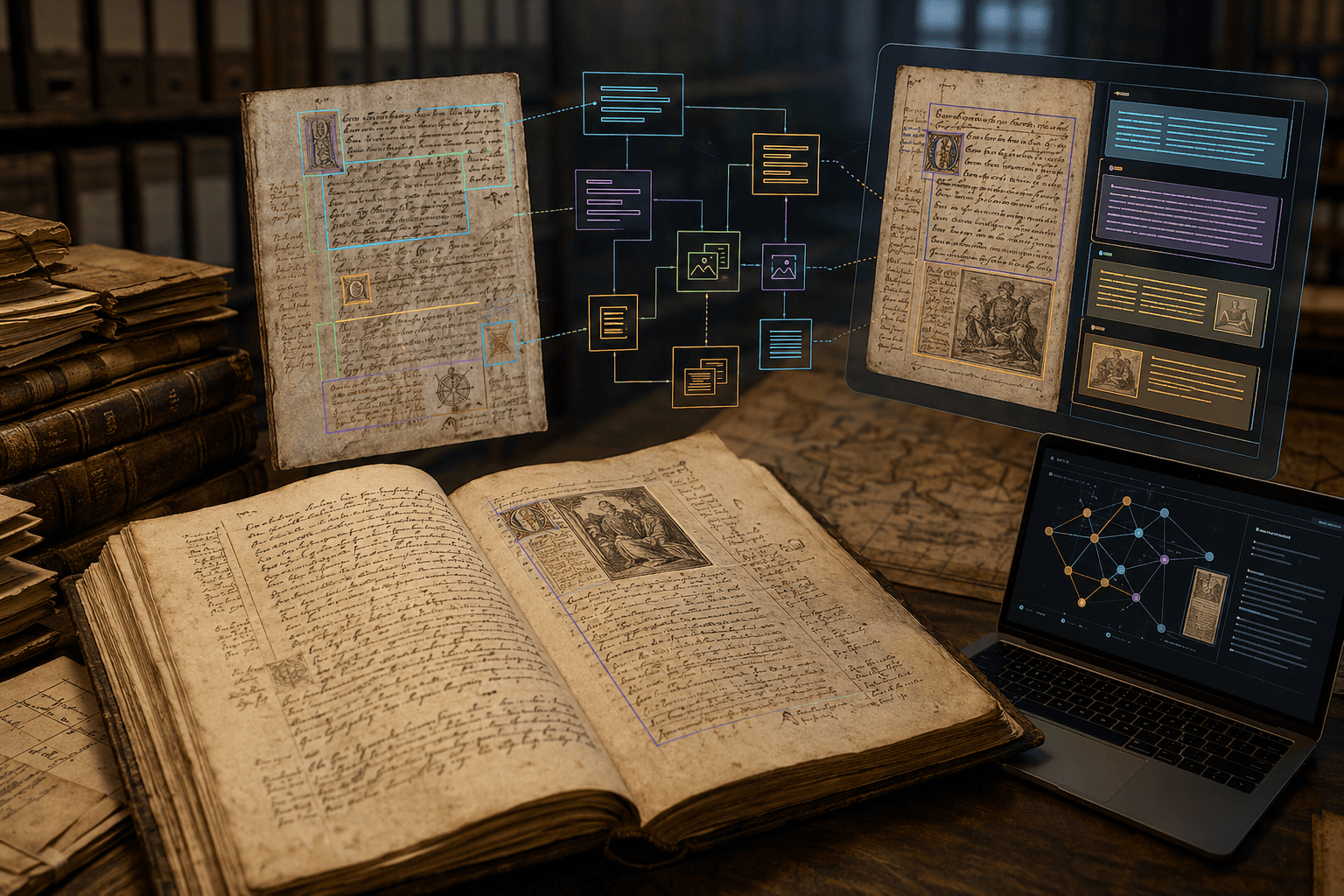
Digital humanities has emerged as a dynamic field bridging computational methods with humanistic inquiry. Within this domain, the structural mapping of historical documents stands out as a crucial methodology. It involves identifying, extracting, and organizing the inherent structural elements within texts and images, such as headings, paragraphs, marginalia, annotations, and even visual layouts. This process transforms unstructured or semi-structured historical data into a machine-readable format.
This transformation is not merely about digitization; it is about creating a deeper, more navigable understanding of the document's internal organization and content relationships. By defining and tagging these structural components, scholars can perform sophisticated queries, visualize connections, and uncover patterns that would be virtually impossible to detect through manual reading alone. It allows for a granular examination of how information was originally presented and intended to be consumed.
The significance of structural mapping extends to preserving the integrity and context of historical sources. When documents are simply scanned, much of their original design and textual hierarchy can be lost in translation to a digital format. A robust structural map ensures that the semantic and organizational nuances are retained, providing a richer context for interpretation and analysis. This approach supports a more faithful engagement with the primary source material.
Furthermore, this methodology facilitates comparative studies across diverse collections and historical periods. By standardizing the structural representation of different documents, researchers can compare not just their content, but also their editorial practices, rhetorical strategies, and information design over centuries. This opens new avenues for interdisciplinary collaboration and expands the scope of historical inquiry considerably.
At Researchcite, we recognize the transformative potential of these techniques. Our work focuses on developing and applying cutting-edge methods for structural mapping, empowering scholars to delve deeper into historical archives. This commitment ensures that the rich tapestry of human history becomes more accessible and comprehensible, fostering new insights and accelerating discovery in the digital humanities landscape.
Experts in digital humanities often emphasize the dual challenge of scale and granularity. Dr. Eleanor Vance, a leading computational linguist, posits that “simply digitizing a document without understanding its internal architecture is akin to having a library without a catalog.” She argues that structural mapping provides this essential catalog, enabling scholars to move beyond keyword searches to a nuanced understanding of textual relationships and hierarchies.
However, the consensus is not absolute regarding the optimal methodology. Some researchers advocate for highly automated approaches using machine learning, particularly for large, homogeneous collections. This offers speed and scalability. Others, like Professor Marcus Chen, highlight the critical role of human oversight, especially for unique or highly varied historical documents where automated systems might misinterpret subtle structural cues, potentially leading to inaccuracies.
A key debate centers on the standardization of structural schema. While common standards like TEI (Text Encoding Initiative) exist, their application can be complex and labor-intensive, requiring specialized skills. There's a push for more user-friendly, flexible frameworks that can adapt to diverse document types without sacrificing analytical rigor. This balance between flexibility and interoperability remains a significant area of active research and development.
Another point of discussion involves the integration of visual and textual structural mapping. Historical documents often combine text with illustrations, diagrams, and unique page layouts. Dr. Anya Sharma, an expert in visual culture, stresses the importance of mapping not just the text, but also the spatial relationships of visual elements to the text. “The way an image is positioned relative to a paragraph can fundamentally alter its meaning,” she notes, advocating for multimodal structural analysis.
The ethical implications of structural mapping are also under scrutiny. The process of defining and tagging structures inherently involves interpretation, which can subtly influence subsequent analyses. Scholars are urged to maintain transparency regarding their methodological choices and potential biases introduced during the mapping phase. This self-awareness is vital for ensuring the integrity and reliability of research findings derived from these advanced techniques.
The structural mapping of historical documents represents a profound advancement in digital humanities. It transforms static archives into dynamic, searchable, and interconnected datasets, opening up unprecedented opportunities for scholarly inquiry. By meticulously deconstructing and reassembling the internal logic of historical texts, we gain not just access to information, but a deeper appreciation for its original context and intent.
As this field continues to evolve, the emphasis will likely remain on developing more intuitive, robust, and ethically sound methodologies. The collaboration between computer scientists, historians, and literary scholars is paramount to refining these techniques, ensuring they serve the diverse needs of humanistic research effectively. The future promises even more sophisticated tools for unraveling the complexities of our shared past.
Researchcite is dedicated to pioneering these advancements, providing the infrastructure and expertise necessary for unlocking new insights from historical records. Our ongoing efforts aim to empower researchers globally, fostering a more comprehensive and accessible understanding of human heritage through innovative structural mapping solutions.
Leave a Comment
Latest Posts



Our Services
Portfolio
© All Rights Reserved
 Researchcite